I am very happy with my wife by listening news of getting 2 babies in womb after ultrasound. Some time ago we were panicked but now we are very happy. Its a great news for us. We are thankful to Delhi IVF & Fertility Centre.
Male Infertility Treatment in India: Expert Care at Delhi IVF and Fertility Research Centre
Male infertility is far more common than many people realise and contributes to nearly half of all infertility cases. Problems related to sperm count, sperm movement, sperm quality, or hormonal imbalance can reduce the chances of natural conception. In many cases, male infertility is treatable, and with the right diagnosis, many men can still achieve biological fatherhood.
At Delhi IVF and Fertility Research Centre, couples receive complete male fertility care under one roof. The centre combines advanced diagnostics, semen analysis, hormonal evaluation, genetic testing, surgical sperm retrieval, and modern fertility treatments to identify the exact cause of infertility and create a personalised treatment plan. With decades of experience and thousands of successful outcomes, Delhi IVF has become a trusted destination for male fertility treatment.
Modern reproductive techniques such as ICSI, PESA, MESA, TESA, and TESE have made pregnancy possible even in complex male infertility cases, including azoospermia and severe low sperm count. With expert guidance, compassionate care, and evidence-based treatment, many couples who once struggled to conceive can now move forward with confidence and hope.
Improve IVF Success with Advanced Genetic Testing
Choose healthier embryos with advanced genetic screening before embryo transfer. At Delhi IVF and Fertility Research Centre, genetic testing helps identify chromosomally normal embryos, improving implantation chances and lowering the risk of repeated IVF failure or miscarriage.
Call Now: +91-9810600235
Understanding Male Infertility
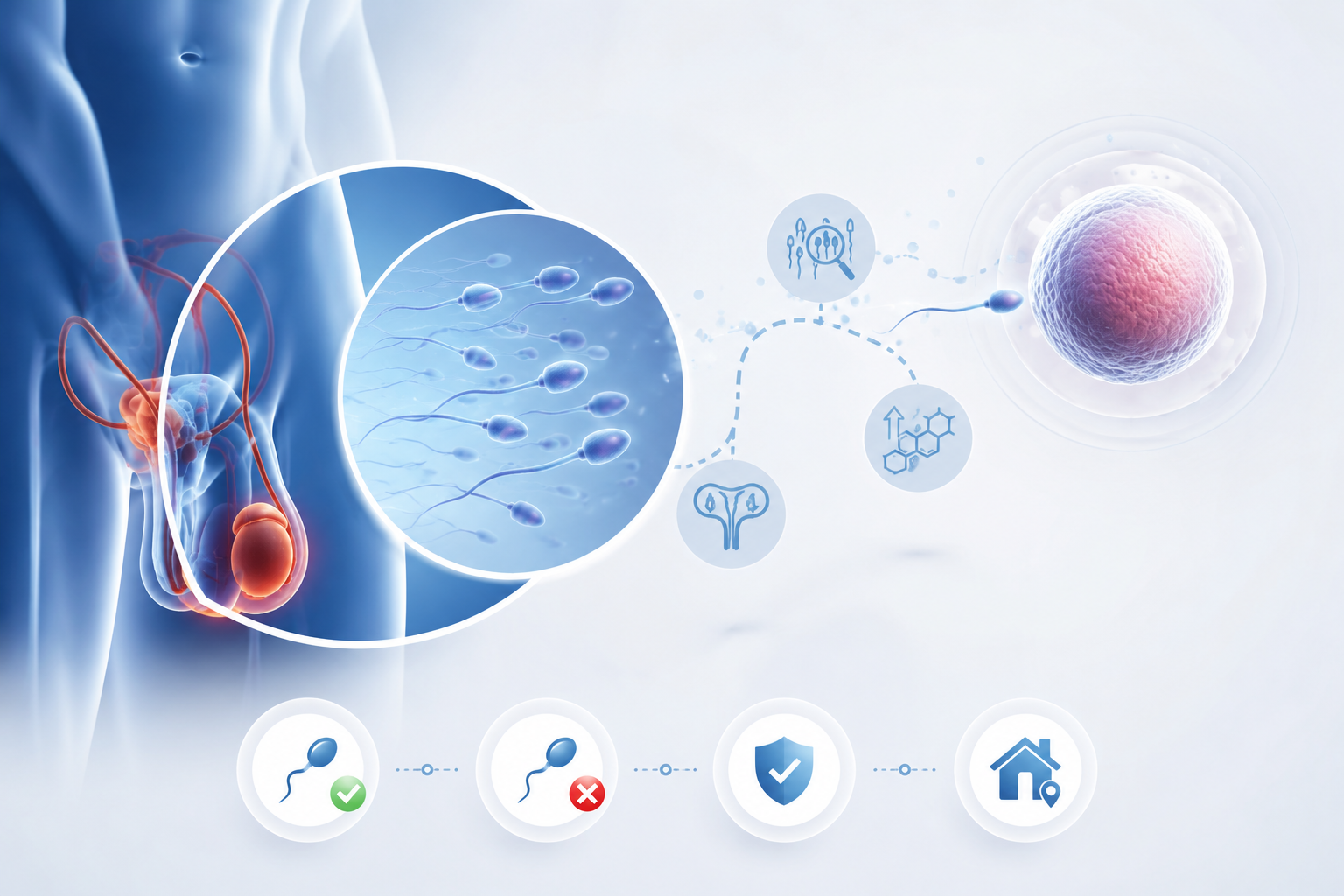
Male infertility means a man's sperm is unable to fertilise a woman's egg naturally. This can happen for several reasons, but in most cases it comes down to a problem with the sperm itself, with sperm production, or with the pathway sperm travels to reach the egg.
Think of it like a delivery system. The sperm needs to be produced in good condition and delivered to the right address. If any part of that chain fails, delivery does not happen. In most cases, a solution exists.
Types and Causes of Male Infertility
Understanding the cause is the first step to the right treatment.
Sperm Production Problems
Low Sperm Count (Oligospermia): A normal sperm count is 15 million sperm per millilitre or more. When the count falls below this, the chances of natural conception reduce proportionally. Mild oligospermia (5 to 15 million/ml) is often treatable with medication and lifestyle changes. Severe oligospermia (below 5 million/ml) typically requires ICSI.
No Sperm in the Ejaculate (Azoospermia): Azoospermia means no sperm is found in a semen sample. It affects approximately 1% of all men and 10% to 15% of infertile men. It can be obstructive (a blockage preventing sperm from reaching the ejaculate) or non-obstructive (the testes are producing little or no sperm). Both types are managed differently. In many cases, sperm can still be retrieved surgically for use with ICSI.
Poor Sperm Movement (Asthenospermia): Sperm need to swim actively to reach and fertilise an egg. When fewer than 40% of sperm are moving normally, fertilisation becomes difficult.
Abnormal Sperm Shape (Teratospermia): Sperm shape affects how well they can penetrate and fertilise an egg. When more than 96% of sperm have an abnormal shape, it is called teratospermia.
Combined Problems: Many men have a combination of low count, poor motility, and abnormal shape together. This is called OAT syndrome and is one of the most common patterns in infertile men.
Hormonal Causes
The production of sperm depends on a precise hormonal signal from the brain to the testes. When FSH, LH, or testosterone levels are disrupted, sperm production suffers. Hormonal imbalances are often treatable with medication, making it one of the more correctable causes.
Obstructive Causes
When sperm production is normal, but a physical blockage prevents sperm from reaching the ejaculate, the condition is called obstructive azoospermia. Causes include vasectomy, congenital absence of the vas deferens (CBAVD), previous infection, or injury. Sperm can be retrieved surgically through PESA, MESA, or TESA and used with ICSI.
Varicocele
A varicocele is an enlargement of the veins inside the scrotum, similar to varicose veins in the leg. It raises the temperature inside the scrotum, which damages sperm production over time. Varicocele is found in approximately 40% of infertile men and is one of the most common and treatable causes of male infertility. Surgical repair often improves sperm parameters significantly.
Genetic Causes
Y-chromosome microdeletions, Klinefelter syndrome (47, XXY), and chromosomal translocations can all affect sperm production. Genetic testing is recommended for men with severe oligospermia or azoospermia. Some genetic conditions can be passed to a child through ICSI, which is why genetic counselling is an important part of treatment planning.
Lifestyle and Environmental Factors
Smoking, excessive alcohol, recreational drugs, anabolic steroids, obesity, exposure to heat (saunas, laptops on the lap), and certain occupational exposures (pesticides, radiation, heavy metals) all have documented negative effects on sperm quality. Addressing these factors is often the first step in treatment.
To know in-depth about Male Infertility Causes and Tests, What Goes Wrong and How It Is Diagnosed, click here: Male Infertility Causes and Tests
How Male Infertility is Diagnosed at Delhi IVF
Accurate diagnosis is essential before any treatment can be recommended. At Delhi IVF, our male fertility assessment includes the following.
Semen Analysis: The foundation of male fertility investigation. It measures sperm count, motility, morphology, volume, and pH. At Delhi IVF, semen analysis is performed in our advanced andrology laboratory to the WHO 2021 criteria.
Repeat Semen Analysis: A single abnormal result does not confirm a problem. Sperm production varies week to week. A second sample collected two to three weeks apart confirms whether a finding is consistent.
Hormone Blood Tests: FSH, LH, testosterone, prolactin, and thyroid function tests assess whether a hormonal imbalance is affecting sperm production.
Scrotal Ultrasound: Identifies varicocele, testicular abnormalities, epididymal cysts, and structural problems.
Genetic Testing: Karyotype, Y-chromosome microdeletion analysis, and cystic fibrosis gene mutation testing (for CBAVD) are recommended for men with severe oligospermia or azoospermia.
Sperm DNA Fragmentation Test: Measures the integrity of the genetic material inside the sperm. High DNA fragmentation is associated with fertilisation failure, poor embryo quality, and recurrent miscarriage, even when sperm count and motility appear normal. This test is recommended for couples with unexplained IVF failure or recurrent pregnancy loss.
Reduce the Risk of Inherited Genetic Disorders
For couples with a family history of genetic conditions such as thalassaemia, sickle cell disease, or other inherited disorders, PGT-M can help reduce the risk of passing these conditions to the baby while preserving biological parenthood.
Speak with Our Fertility & Genetics Experts: +91-9810600235
Male Infertility Treatment Options at Delhi IVF
Treatment is matched to the diagnosis. Here is what we offer.
Medical and Hormonal Treatment
When low sperm count or poor motility is caused by a hormonal imbalance or nutritional deficiency, medication can improve sperm parameters significantly. Clomiphene, gonadotropins, antioxidant therapy, and addressing thyroid or prolactin disorders are all used depending on the specific cause.
Lifestyle Modification Programme
At Delhi IVF, our team provides personalised lifestyle guidance for men with sperm problems linked to modifiable factors. Weight reduction, smoking cessation, alcohol reduction, and targeted nutritional supplementation including CoQ10, Vitamin C, Vitamin E, zinc, selenium, and folic acid can improve sperm quality over three to six months.
Varicocele Treatment
Varicocele repair can improve sperm count, motility, and morphology. Natural conception or IUI often follows successful repair. If parameters remain poor, ICSI is the next step.
Surgical Sperm Retrieval
For men with azoospermia or ejaculation failure, surgical sperm retrieval makes biological fatherhood possible. At Delhi IVF, we offer the full range of retrieval procedures:
- PESA (Percutaneous Epididymal Sperm Aspiration): for obstructive azoospermia
- MESA (Microsurgical Epididymal Sperm Aspiration): for obstructive azoospermia requiring larger sperm volumes
- TESA (Testicular Sperm Aspiration): for non-obstructive azoospermia and failed epididymal retrieval
- TESE (Testicular Sperm Extraction): for complex non-obstructive azoospermia
Retrieved sperm is used with ICSI to fertilise eggs and create embryos.
ICSI (Intracytoplasmic Sperm Injection)
ICSI is the most effective treatment for severe male factor infertility. A single healthy sperm is selected and injected directly into each egg. Even men with extremely low sperm counts, very poor motility, or sperm retrieved surgically can achieve fertilisation through ICSI. Delhi IVF delivered Delhi's first ICSI baby in 1996 and has been performing it with consistently high success rates ever since.
Donor Sperm
When no viable sperm can be retrieved despite all available techniques, donor sperm from a certified, regulated sperm bank is an option.
Male Infertility Treatment Cost in India
Costs vary significantly depending on the treatment required.
- Semen analysis and full male fertility workup: Rs 3,000 to Rs 8,000
- Medical treatment (hormonal or antioxidant therapy): Rs 2,000 to Rs 8,000 per month
- Surgical sperm retrieval (PESA, TESA): Rs 15,000 to Rs 35,000
- MESA: Rs 25,000 to Rs 60,000
- ICSI cycle (including retrieval): Rs 1,15,000 to Rs 2,30,000
At Delhi IVF, all costs are discussed transparently before treatment begins. Our team will outline the most cost-effective pathway based on your diagnosis, not the most expensive one.
Real Families. Real Stories.
Our Team
Meet the specialists behind your baby dream
Senior IVF consultants, embryologists and gynaecologists working as one team.

Dr. Anoop Gupta
Director & IVF Specialist, Delhi IVF & Fertility Research Centre

Dr. Aastha Gupta
Infertility Specialist, Obs & Gynae (Gold Medalist)

Mrs. Alka Gupta
Chief Embryologist, Delhi IVF & Fertility Research Centre

Dr. Mannan Gupta
MBBS & MS – Obstetrics & Gynaecology, Maulana Azad Medical College

Why Patients Choose Delhi IVF for Male Infertility Treatment
Dr. Anoop Gupta, Director and IVF Specialist has 34+ years of experience managing male factor infertility including the most complex azoospermia cases. He delivered Delhi's first ICSI baby using surgically retrieved sperm in 1996.
Mrs. Alka Gupta, Chief Embryologist has 32 years of experience in andrology and sperm processing. She leads all semen analysis, DNA fragmentation testing, and ICSI preparation at Delhi IVF. Her expertise in identifying and selecting viable sperm, even in the most difficult samples, is a direct factor in our success rates.
Dr. Aastha Gupta, Infertility Specialist coordinates the combined treatment planning for couples where both male and female factors are present, ensuring male and female treatment plans are fully integrated.
What our patients experience at Delhi IVF:
- Complete male fertility programme from diagnosis to surgical retrieval to ICSI, all under one roof
- Advanced andrology laboratory performing semen analysis to WHO 2021 standards
- Sperm DNA fragmentation testing available for unexplained cases
- 25,000+ successful deliveries since 1993
- Patients from 66+ countries including many referred specifically for complex male factor cases
- Genetic counselling for men with identified genetic causes before proceeding with ICSI
Our Success Stories
25000 Happy Couples with real stories from Delhi IVF Patients,

What our patient's are saying
I am so happy to share that my IVF result came positive. Thank you Delhi IVF and Dr Anoop Gupta and Dr Aastha Gupta. The team here is amazing very professional, kind and encouraging. Thank you for giving us hope and happiness truly the best clinic for IVF.
Started with great first initial virtual with Dr Anoop Gupta ,Dr Aastha and team especially Beautiful Preeti ,explained everything perfectly with clear cost of treatment and services provided .Managed to come to the Centre from London in December greeted with nice supportive staff team ,as we had limited time ,all the tests and treatment started quite quickly and continued nicely till the end of.Very impressive experience to be here and feel blessed already Thank you for everything
Delhi IVF is the most trusted place, Dr. Anoop Gupta and team, as well as all the staffs are very kind and knowledgeable. Thank you! I got pregnant at first try. I am very happy now. I don't get word to express my feelings and how thankful I am for all Delhi IVF Doctors and staffs.Thank you again.
We are so happy to share that after trying from 11 years we conceived from Delhi IVF in first cycle I am very happy I work in TV9 as a journalist and I came here through reference and then first IVF successful with twins I will recommend everyone to come here for any problem with conceiving.
Today was my first visit to Delhi IVF centre in srinagar and i felt very good after coming here.The treatment was excellent.I want to tell everyone that if there is any good IVF centre in kashmir.it is only one Delhi IVF centre where Dr.Anoop Gupta provides treatment thank you so much.
My partner and I highly recommend the Dr. Anoop Gupta & his clinic Delhi IVF & fertility centre!!! Our experience was absolutely fantastic; the nurses are very kind, helpful and extremely talented across the whole range from doctors, nurses, and administrators.
I am very happy and my experience with Delhi IVF center is very nice. Now I'll get my 2 baby from the treatment in Delhi IVF. Very good and helpful staff. And I have no words for Dr. Anoop Gupta, he is very kind and well caring.Thank you Dr. Gupta and all staff members.
It's an amazing IVF centre, all doctors and staff are very supportive. We have been trying since a very long time, finally got success, all thanks to Delhi IVF.
Very good experience after visiting and meeting with Dr. Anoop gupta ji and his team. Before visiting here we had lost all hopes of conceiving baby but here we got confidance again and successfully gives birth to beautiful princess.
I am short of words when it comes to thanking Delhi IVF for what it has given me. I had been trying for 8 yrs and this clinic has given me the best gift ever. The team of doctors led by Dr Gupta and Dr Vinny are very helpful and caring.
Dr Gupta is an amazing doctor. I strongly advise to all friends and family who are struggling to become parents. You are assured to have a very satisfying experience and you could faith him fully to make the best result for you.
I am very happy with my wife by listening news of getting 2 babies in womb after ultrasound. Some time ago we were panicked but now we are very happy. Its a great news for us. We are thankful to Delhi IVF & Fertility Centre.
I am so happy to share that my IVF result came positive. Thank you Delhi IVF and Dr Anoop Gupta and Dr Aastha Gupta. The team here is amazing very professional, kind and encouraging. Thank you for giving us hope and happiness truly the best clinic for IVF.
Frequently Asked Questions
Q1: What are the main causes of male infertility in India?
The most common causes are low sperm count (oligospermia), poor sperm motility (asthenospermia), abnormal sperm shape (teratospermia), azoospermia (zero sperm), varicocele, hormonal imbalances, and genetic conditions. Male factor infertility contributes to approximately 50% of all infertility cases in India, making a thorough semen analysis essential for every couple.
Q2: Can male infertility be treated successfully in India?
Yes. Most causes of male infertility are treatable. Hormonal causes respond to medication. Varicocele is surgically correctable. Obstructive azoospermia can be resolved through sperm retrieval and ICSI. Even men with non-obstructive azoospermia can father biological children through TESA or TESE combined with ICSI in many cases.
Q3: How much does male infertility treatment cost in India?
Costs vary by treatment. A full male fertility workup costs Rs 3,000 to Rs 8,000. Medical treatment ranges from Rs 2,000 to Rs 8,000 monthly. Surgical retrieval (PESA, TESA) costs Rs 15,000 to Rs 35,000. A complete ICSI cycle with retrieval costs Rs 1,15,000 to Rs 2,30,000. Delhi IVF provides transparent pricing before any treatment begins.
Q4: What is sperm DNA fragmentation and how does it affect fertility?
Sperm DNA fragmentation measures damage to the genetic material inside the sperm. Men with high fragmentation can have a normal semen analysis yet still experience fertilisation failure, poor embryo quality, and recurrent miscarriage. Testing is recommended for couples with unexplained IVF failure or two or more pregnancy losses.
Q5: Can a man with zero sperm count (azoospermia) father a biological child?
Yes, in many cases. For obstructive azoospermia, sperm retrieved through PESA or MESA is used with ICSI with good success rates. For non-obstructive azoospermia, TESA or TESE can find sperm in 30% to 60% of cases. Your specialist at Delhi IVF will assess the likely cause and give you an honest estimate before proceeding.
Q6: Can varicocele cause male infertility and can it be treated?
Yes. Varicocele is found in approximately 40% of infertile men and is one of the most common treatable causes. It raises testicular temperature, damaging sperm production over time. Microsurgical varicocelectomy can significantly improve sperm count, motility, and morphology. Many couples conceive naturally or through IUI after successful repair.
Q7: How long does it take for sperm quality to improve after male infertility treatment?
Sperm takes approximately 72 days to complete development. Any improvement from lifestyle changes, medication, or varicocele repair will take a minimum of three months to appear in a semen analysis. Your specialist at Delhi IVF will advise the appropriate waiting period before reassessing and deciding on next steps.
Q8: Is a single abnormal semen analysis result enough to diagnose male infertility?
No. Sperm quality varies from week to week due to illness, stress, temperature, and lifestyle factors. A single abnormal result should always be confirmed with a repeat semen analysis collected two to three weeks later. At Delhi IVF, we follow WHO 2021 guidelines and always confirm a finding before recommending treatment.
Q9: What lifestyle changes can improve sperm quality for male infertility?
Stopping smoking, reducing alcohol, avoiding recreational drugs and anabolic steroids, maintaining a healthy weight, reducing scrotal heat exposure, and taking targeted supplements including CoQ10, Vitamin C, Vitamin E, zinc, and selenium can all improve sperm quality. Results take three to six months to appear in semen analysis.
Q10: Should both partners be tested when a couple cannot conceive?
Yes, always. In approximately 30% to 40% of infertile couples, both a male and a female factor are present simultaneously. Treating only one side while missing the other delays the path to pregnancy. At Delhi IVF, both partners are assessed at the same consultation to ensure no contributing factor is overlooked.

Trusted Genetic Screening & IVF Care in India
With 34+ years of fertility expertise and over 25,000 successful deliveries, Delhi IVF and Fertility Research Centre combines advanced embryo testing, experienced embryologists, and personalised fertility care to support healthier pregnancy outcomes.
Call Delhi IVF Today: +91-9810600235